
PROGRAM
Thematic Workshop
Chaired by Stefania Peracchi and Giovanni Santin
“Measuring to Protect Future Missions: The Critical Role of Detection
and Novel Dosimetry in Harsh Radiation Environments”

OVERVIEW
The workshop explores the full spectrum of space radiation monitoring, from simulation to in-orbit measurements, and highlights the importance of accurate, real-time detection and advanced dosimetry to inform radiation protection strategies for future missions beyond LEO. With contributions from current missions, as well as insight into next-generation detectors and onboard processing challenges, the sessions will foster discussion on what we measure, how we measure it, and why it matters, for a cohesive approach to interpreting the space radiation environment.
CLICK HERE TO GO BACK TO TOP
SCHEDULE
Structure:
- 30 min per speaker (5 min intro + 25 min talk)
- No Q&A as the questions will be gathered via QR code and included in the panel discussion
- Two panel discussions – morning and afternoon
CLICK HERE TO GO BACK TO TOP
MORNING SESSIONS
Session 1: In-orbit Data: Space Radiation Environment “Simulated vs Measured”
Overview: in this session three talks will cover all the aspects of measurements in-orbit, including the dose contribution, the SPE fluxes and worst cases, and measurement and observation of radiation effects.
Talk 1: “Dose Measurements: Real in-orbit data from a dose perspective”
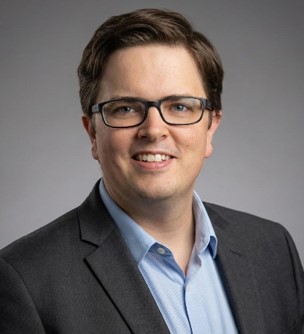
Speaker: Stuart George (NASA – Space Radiation Analysis Group)
Bio: Dr. Stuart George is the instrument lead for the NASA Space Radiation Analysis Group (SRAG) at Johnson Space Center, where he leads and supports the development and delivery of space radiation instrumentation for human spaceflight. He has contributed flight hardware for the International Space Station and exploration and commercial missions including Artemis I/II/III, Polaris Dawn, Fram2, and Astrobotic Peregrine. Dr. George is the Principal Investigator of the Compact Electron Proton Spectrometer (CEPS), funded by NASA’s Development and Advancement of Lunar Instrumentation program and the Mars Campaign Office, and manifested for flight on the upcoming CAPSTONE2 mission. His work has been published in journals including Nature and Science Advances and has been featured by outlets including CNN, Reuters, ABC Australia, and on the NASA and CERN homepages. Previously, he held a postdoctoral appointment at the University of Houston and a Marie Skłodowska-Curie Fellowship at CERN as part of the ARDENT EU project. He received his Ph.D. from the University of Wollongong (2016) and an MPhys in Physics from the University of Sheffield (2012).
Abstract: This talk presents radiation measurements acquired during NASA’s Artemis mission using a suite of advanced radiation detectors deployed in the space environment. Drawing on operational experience from human spaceflight and electronics qualification, the presentation compares the differing radiation concerns, measurement approaches, and risk drivers for astronauts and spacecraft systems. An introduction will be provided to HERA and Timepix-based detector technologies used for characterising the space radiation environment. The talk will highlight measurements collected during passages through the Van Allen radiation belts and observations of the Galactic Cosmic Ray (GCR) environment encountered during the mission. The presentation will also provide an overview of NASA’s Space Radiation Analysis Group (SRAG), including its operational role in protecting crew during space missions and its ongoing research and development activities focused on next-generation radiation detectors and monitoring capabilities for future exploration missions.
CLICK HERE TO GO BACK TO TOP
Talk 2: “Flux Measurements: fluxes and Van Allen Belt perspective”
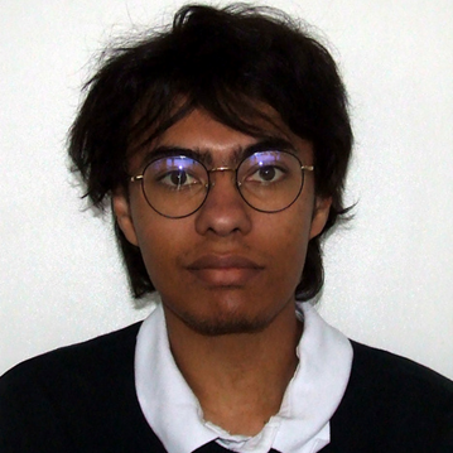
Speaker: Quentin Gibaru (ONERA)
Focus: overview of flux measurements during last solar cycles vs models, Van Allen belts historical measurements and needs
Bio: Dr. Quentin Gibaru is a research scientist in space environment at the Physics, instrumentation and space environment Department of ONERA (DPHY) since 2023. He is currently involved in physical modelling of electron radiation belts (Salammbo suite) for the Earth, physical modelling of VLF wave-particle interactions, and the development of space radiation monitors. He is also involved in the GEANT4 collaboration as a developer of the MicroElec module in low energy electromagnetic physics. Before this, he earned his PhD in solid state physics in 2022, working on the physical modelling and experimental study of low energy electron transport in dielectric materials for space applications. His scientific contributions include 11 peer review papers and 14 contributed talks.
Abstract: Since the discovery of the Van Allen radiation belts in the late 1950s, a large number of instruments have been flown to gather in-situ measurements of space radiation fluxes. Such information on the radiative environment is essential to estimate the hazards to be encountered by future spacecrafts orbiting the Earth. In this regard, extensive databases of radiation flux measurements are available nowadays for LEO, GPS and GEO orbits. Developments in radiation belt modelling and computer simulations have also allowed to fill the gaps in the geomagnetic space between these different orbits, by combining physical models with flux measurements through data assimilation. Nevertheless, some efforts are still necessary to improve our understanding of the Van Allen radiation belts.
After a survey of the currently available flux measurements in the Van Allen belts, this talk will present an overview of data assimilation tool’s performances. Then, remaining challenges in radiation belt modelling will be listed and some ways forwards will be suggested. Notably, large uncertainties in data assimilation appear in steep gradient regions for which there is a need of in-situ data. Similarly, steep gradients at high electron and proton energies are not well sampled by actual instruments and limit our capability to reproduce their dynamics. Finally, reliable measurement datasets with limited cross-contamination and saturation are therefore needed in order to produce accurate simulations of the space radiation environment.
CLICK HERE TO GO BACK TO TOP
Talk 3: “Radiation Monitors and Flight data – A CNES Overview”

Speaker: Marta Rizzo (CNES)
Focus: overview of measurement of radiation effects experienced by CNES suite of detectors and missions.
Bio: Marta Rizzo is a Radiation and Components engineer at CNES, the French Space Agency. Her areas of expertise include Radiation Hardness Assurance for CNES projects and international cooperations, radiation testing of electronic components and systems, and radiation environment estimation. Additionally, she is responsible for the CARMEN radiation monitors Mission Centres at CNES. Before working for the French Space Agency, Ms Rizzo has been working for ESA, the European Space Agency, in the Radiation Hardness Assurance and Components Analysis Section. Before ESA, she worked for CERN, the European Organization for Nuclear Research, where she conducted research on a floating gate dosimeter and contributed to the 60Co irradiation facility. Ms Rizzo holds a BSc and a MSc in Electronics Engineering from Politecnico di Milano, and is part of the Women in Aerospace (WIA) organization and a member of IEEE, French Section.
Abstract: This talk will present an overview of radiation environment data, collected by CNES, both through CARMEN radiation monitors and in-flight feedback. The monitor payloads will be described, and some technical aspects of detector design and radiation monitoring will be introduced. The general aim will be to give an idea of how the data is collected, from what sources, and how it’s used. Specifically, radiation data is remarkably useful for environment modelling, thus for model development and benchmarking. Radiation hardness assurance is the second fundamental use case for data collected from detectors and in-flight experiences. Moreover, future potential for radiation monitors will also be discussed, from an opportunity/cost angle. Finally, some in flight anomaly cases will be presented, with a stress on the importance of sharing relevant flight data in a timely manner. Overall, the role of data in mission design and quality assurance will be thoroughly presented.
CLICK HERE TO GO BACK TO TOP
Session 2 – Detect What Matters !
Overview: after an overview in session 1 about real data that we currently have from measurement in space, session 2 will discuss whether what we are measuring today is really what we need to correlate space weather with radiation effects in electronics – introducing perspectives from space monitoring vs dosimetry.
Talk 4: “What do we need to measure in Space for Human and Robotic Exploration?”
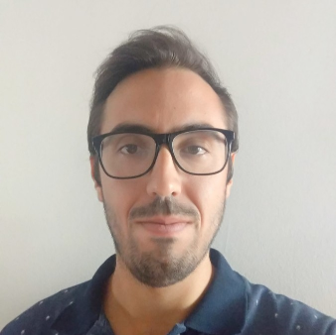
Speaker: Marco Pinto (on behalf of ESA Facility Definition Team)
Focus: Measurements needed over the next 10–15 years: what must be measured for the Moon / on the Moon, which gaps remain, whether heavy ions / microdosimetry / neutron measurements are required, with what precision and why? Clearly separating scientific priorities and industry needs.
Bio: Dr. Marco Pinto is a researcher at the Laboratory of Instrumentation and Experimental Particle Physics (LIP), where he coordinates the SpaceRad group and the RADLIP competence centre, and an Invited Assistant Professor at Instituto Superior Técnico – University of Lisbon. He earned his PhD at Instituto Superior Técnico working on the development of the JUICE mission. He is currently the instrument scientist for the radiation monitors onboard ESA’s BepiColombo and JUICE missions. Previously, he spent three years as a research fellow at the European Space Agency, focusing on radiation effects in flight. His work bridges radiation effects, space environments, and the development and operation of radiation-monitoring instrumentation for space missions.
Abstract: Radiation is one of the defining challenges of deep-space exploration. For both human and robotic missions, it is a critical hazard that drives spacecraft design, crew safety, and surface operations. At the same time, radiation measurements can provide unique information on the space environment, planetary processes, and even the presence of in-situ resources. This talk reviews the needs identified by the ESA Future Exploration Radiation Facility Definition for future European exploration missions. It describes the measurements required to support exploration beyond low Earth orbit, with applications ranging from radiation protection to heliophysics, planetary science, and in-situ resource utilization. It also assesses the technologies already available in Europe and discusses the developments still required to equip future missions. Together, these elements define a roadmap for the radiation instrumentation needed to support Europe’s future exploration ambitions
CLICK HERE TO GO BACK TO TOP
Talk 5: “What do we need to measure on accelerators?”
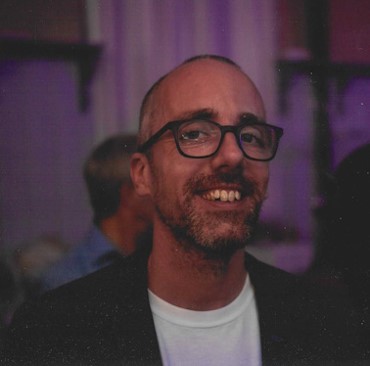
Speaker: Christoph Schuy (GSI)
Focus: overview of consistent, well‑characterised dosimetry across accelerator facilities for space‑radiation effects testing, perspective on effective dosimetry strategies, including beam‑monitor calibration and correction methods that improve replication and measurement of key space‑radiation quantities, LET spectra, flux, energy distributions, and dose in silicon, and on the role of on‑beamline detectors in routine dosimetry and beam‑quality assurance.
Bio: Dr. Christoph Schuy earned his PhD in physics at the Technical University of Darmstadt (2014) while working in the biophysics department of GSI Helmholtzzentrum für Schwerionenforschung. Afterwards, he joined the department’s Space Radiation Physics group as a post‑doctoral researcher, where he mainly carried out nuclear‑fragmentation experiments of interest for both particle‑therapy and space‑radiation protection. Since early 2024, Dr. Schuy has been the head of the Space Radiation Physics group, focusing on the development of GSI’s galactic‑cosmic‑ray (GCR) simulator and its next‑generation counterpart for the upcoming FAIR (Facility for Antiproton and Ion Research) accelerator complex. These tools aim to provide realistic space-like radiation environments for e.g., biomedical research.
Abstract: Electronics systems that power today’s spacecrafts, are exposed to a highly complex space radiation environment that ranges from electrons with a few MeV in the Van Allen belt to the highly energetic heavy ions of the Galactic Cosmic Rays (GCR). Ground-based radiation sources – from tabletop lasers to huge accelerator complexes – are used to reproduce these effects in the lab. Even though radiation testing has been performed since many decades, there is still room for improvement, especially given the emergence of extremely heavy or high energy ions and new techniques to create complex radiation fields. Therefore, this talk will highlight current gaps in predominantly accelerator-based testing and will propose suggestions how to mitigate at least some of them in the coming years.
CLICK HERE TO GO BACK TO TOP
Panel Discussion #1
Participants:
- Stuart George (NASA)
- Marta Rizzo (CNES)
- Marco Tinto (FDT)
- Christoph Schuy (GSI)
- Quentin Gibaru (ONERA)
CLICK HERE TO GO BACK TO TOP
AFTERNOON
SESSIONS
Session 3: Industry Perspectives, Technology Transfer, and Novel Detector Technologies
Overview: afternoon session will focus on detection technologies especially aiming to foster collaboration across agencies, academia, and industry, tackle detector challenges in space and accelerator environments, and explore pathways for technology transfer and commercialization.
Talk 6: “The Medipix Collaboration and Industry”: From Technology to Application – From Research to Industry
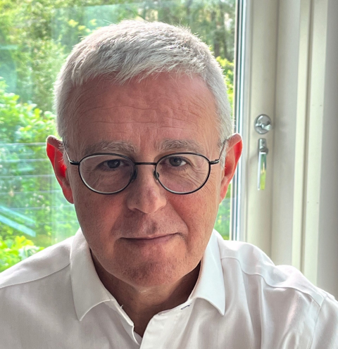
Speaker: Michael Campbell (CERN)
Focus: Transition from research to real industry applications; Medipix – Bringing CERN Technology to Market challenges and highlighting the critical steps to move from lab to space.
Bio: Michael Campbell is the outgoing team leader for hybrid pixel detectors in the Microelectronics Section in the Experimental Physics Department at CERN where he has worked for over 30 years. He was one of the pioneers of hybrid pixel detector readout and of the use of radiation-hard-by-design techniques for ASICs both of which are now exploited widely at the LHC experiments. He was the founding spokesperson of the Medipix2, Medipix3 and Medipix4 Collaborations, roles he has recently passed on to his successors. The Collaborations seek to disseminate pixel detector technology to many different fields and have also contributed to innovative solutions in High Energy Physics experiments. He has acted as host of a series of bi-annual workshops on Medical Applications of Spectroscopic X-ray Detectors at CERN which have contributed to bringing spectroscopic X-ray imaging from the lab to the clinic. Michael received his PhD from the University of Strathclyde, Glasgow, Scotland (his native city) and has authored several hundred scientific publications. In 2016, he was appointed Honorary Professor of the Department of Physics and Astronomy at the University of Glasgow. He is the 2025 recipient of the IEEE NPSS Glenn Knoll Radiation Instrumentation Outstanding Achievement Award for his work on hybrid pixel detectors
Abstract: The Medipix collaborations, hosted at CERN, bring together publicly funded research institutions to develop advanced hybrid pixel detector ASICs for imaging and particle detection. Over more than two decades, the Medipix and Timepix chip families have evolved to deliver increasingly sophisticated capabilities, enabling applications ranging from medical imaging and radiotherapy monitoring to space science and materials analysis. Collaboration-driven innovation, supported by shared resources and scientific goals, has facilitated strong partnerships with industry through licensing, leading to significant technology transfer and market growth. The success of the initiative highlights the importance of collective vision, open collaboration, and sustained investment in translating high-energy physics technologies into impactful real-world applications. This talk will discuss the transition from research to commercialised technologies, highlighting the key points to success and the difficulties.
CLICK HERE TO GO BACK TO TOP
Talk 7: “Industry Perspectives, Technology Transfer & Novel Detectors”

Speaker: Roberta Mancini (Thales Alenia Space)
Focus: overview of technological roadblocks/difficulties to extract data from radiation-induced effects experienced by industry on sensors and instruments in space. What do we need from a scientific point of view to do data analysis on engineered components (response function, etc)?
Bio: Roberta Mancini is a physicist with over 25 years of experience in the space sector, who began her career as a Radiation Engineer within the Quality Engineering Department of Thales Alenia Space Italy, where she developed strong expertise in radiation effects on space equipment, progressively expanding her knowledge across subsystems and full satellite systems. Over the years, she has built extensive experience in radiation mitigation techniques and has held the role of Radiation Team Technical Manager across a wide range of major international programs. Her portfolio spans scientific missions such as Euclid and ExoMars (2016 and 2020), Earth observation missions including Cosmo Second Generation, Sentinel, and Meteosat Third Generation, as well as navigation systems like Galileo. She has also supported military missions and interfaced with both commercial and institutional customers. Roberta currently leads the Transnational Radiation Team at Thales Alenia Space. In this capacity, she oversees radiation hardness assurance (RHA) expertise, contributes to industry initiatives such as the RADECS association, and plays both technical and financial roles in the HEARTS project under the Horizon 2020 program. Her responsibilities also include supporting bid phases, managing customer relationships throughout program lifecycles, and coordinating alert management activities.
Abstract: Space missions, to be successful, must meet stringent environmental requirements, particularly with respect to radiation. The space environment can significantly impact the reliability of electrical components and materials, as well as entire electronic boards, equipment, and subsystems, ultimately compromising the satellite and the mission itself. During the so-called Phase A of a space project, it is essential to define mission objectives, assess feasibility, and characterise the orbit, environment, and lifetime, including appropriate design margins. The space radiation environment is highly complex and variable, requiring cutting-edge approaches that balance technological innovation, economic competitiveness, and adaptable design requirements. To define the radiation environment, widely used models such as AP8/AE8 and the more recent AE9/AP9 are employed. While both have strengths, their limitations can lead to either overestimation or underestimation of radiation effects, often resulting in conservative and overlapping design margins that may impact overall system optimisation.
How can industry address these limitations while remaining competitive and meeting mission requirements? Two main approaches can be pursued. The first involves improving radiation environment models through the deployment of dedicated radiation monitors. The second focuses on developing robust in-flight data analysis methods using components already integrated into the mission. The latter approach is both technically and economically advantageous, as it enables the detection and interpretation of real in-flight data through telemetry analysis, providing direct evidence of system robustness to stakeholders. This presentation will highlight specific examples demonstrating how enhanced in-flight measurements can transform radiation telemetry into actionable reliability information, supporting both design optimisation and mission operations.
CLICK HERE TO GO BACK TO TOP
Talks 8: “Novel Fiber-based Detector Technology for Space, Beamlines and Beyond”
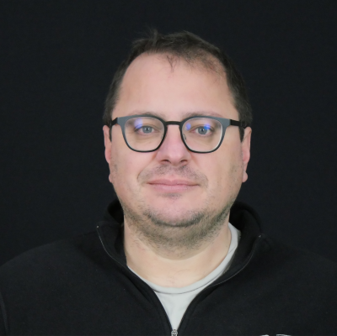
Speaker: Sylvain Girard (University of Saint-Etienne)
Focus: review of the novel approach to dosimetry using fibre optics, for both space, accelerators environment and other radiation environments that could be of interest.
Bio: Sylvain Girard is a Distinguished Professor at Université Jean Monnet in Saint-Étienne. He started his career at CEA in 2004, where he worked on radiation vulnerability and hardening of optical fibers and image sensors for the Laser Mégajoule. Since 2012, he has led research at the Laboratoire Hubert Curien on predictive modeling and experimental characterization of optical materials, photonic components operating in harsh environments. He has developed extensive collaborations leading to two joint research labs, LabCom, with Exail and ORANO. He is the author or co-author of more than 350 peer-reviewed papers. He has also held major editorial roles, including for IEEE Transactions on Nuclear Science, Sensors, and Scientific Reports. Senior Member of the Institut Universitaire de France since 2023, he has received several international awards recognizing his contributions to photonics and radiation effects research.
Abstract: Recent advances in fiber-based detector technologies are creating new opportunities for operation in radiation-rich environments such as space missions, particle accelerators, and the nuclear industry. This presentation will review recent results on various architectures of fiber-optic dosimeters developed for real-time monitoring of total dose and dose rate under extreme conditions. Particular emphasis will be placed on how point and distributed radiation detectors, based on radiation-induced attenuation or radioluminescence phenomena, initially developed for ground-based applications, can be adapted to meet space requirements. The talk will also highlight the growing technological maturity of these solutions, from laboratory demonstrations to validated deployments on Earth and in orbit, enabling their integration into an expanding range of operational environments. These developments demonstrate how this technology can provide lightweight, compact, and efficient sensing solutions for next-generation aerospace, scientific, and industrial applications.
CLICK HERE TO GO BACK TO TOP
Panel Discussion #2
Participants:
- Michael Campbell (CERN),
- Roberta Mancini (Thales Alenia Space),
- Silvain Girard (University of Saint-Etienne)