
PROGRAM
Keynote Speakers
“Ignis/Axiom-4 Mission: from launch to landing”
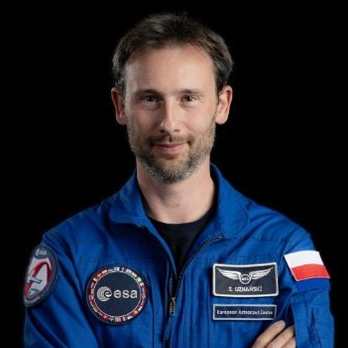
Sławosz Uznański Wiśniewski
ESA Astronaut & Radiation Effects Specialist
Sławosz Uznański‑Wiśniewski is a Polish ESA project astronaut and electronics engineer with extensive experience in radiation‑tolerant microelectronics for space and accelerator applications. Before joining the European Space Agency, he worked at CERN as Engineer in Charge of the Large Hadron Collider, responsible for the operational performance of the world’s largest scientific instrument.
He holds degrees from Łódź University of Technology and Université de Nantes, and earned his PhD at Aix‑Marseille University, focusing on radiation‑resistant electronic systems. In 2022 he was selected to the ESA astronaut reserve and later appointed ESA Project Astronaut. In 2025, he flew to the International Space Station on Axiom Mission 4, becoming the first Polish astronaut to visit the ISS, becoming Poland’s first ISS astronaut and marking the country’s return to human spaceflight after nearly 47 years.
His scientific work includes designing high‑reliability electronic systems, leading radiation test campaigns, and contributing to European space technology development. He has authored a book and over 50 scientific publications on radiation effects in electronics.
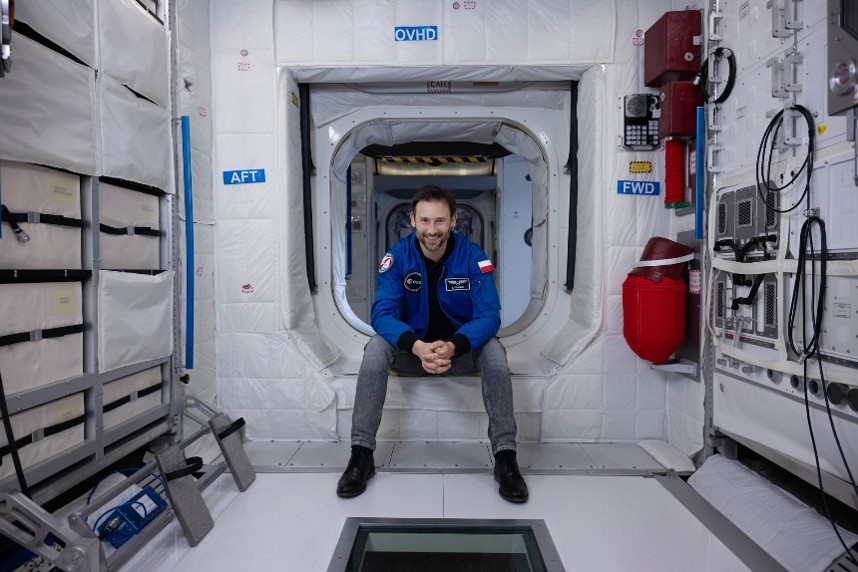
© ESA – Sławosz Uznański‑Wiśniewski
“Architecture and radiation: From space stations to modular power plants and deep storage of spent nuclear fuel”
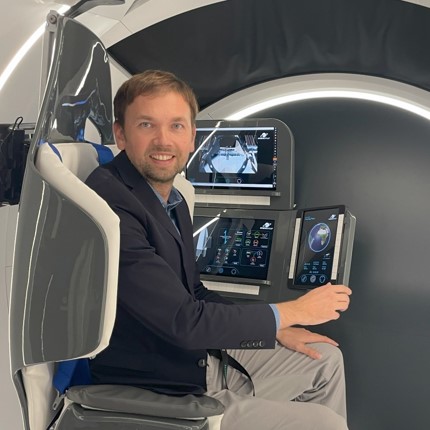
Tomas Rousek
Space Architect
Tomas Rousek is a space architect and CEO of XTEND, with over 25 years of experience in innovative architecture and design for space, commercial, and public projects. Tom has partnered on projects with NASA, ESA, DLR, and the EU. His research encompasses robotic construction methods, 3D printing, expandable structures, life-support systems, and VR. He led the research for SinterHab, the first concept of a 3D-printed lunar module based on NASA technology. Tom also contributed to the architectural design for the Olympic Games, the FIFA World Cup, and Formula 1. He has developed designs for major brands such as Vodafone, Skoda Auto, Mercedes-Benz, and LEGO. As Director of Architecture at ThinkOrbital in Colorado, he works on the development of scalable, cost-efficient space infrastructure based on robotic in-space assembly and welding.
“Czech Republic’s Capabilities and Ambitions in Space Activities”
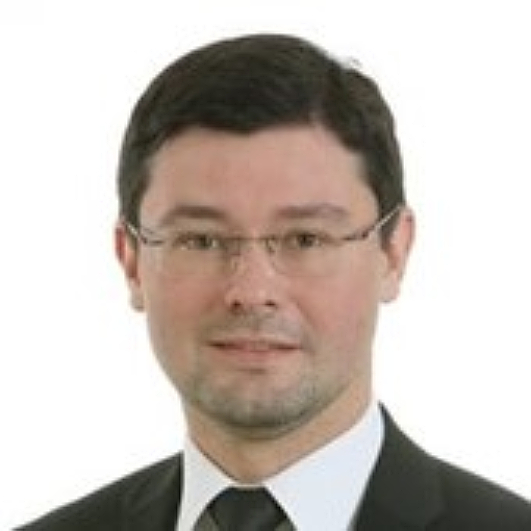
JUDr. Václav Kobera
Director of Space Agency of the Czech Republic - Ministry of Industry and Trade
JUDr. Václav Kobera is a Czech public official specializing in space policy, and international cooperation in the space sector. He has served in senior positions within the Czech government since the mid‑2000s and became Director of the Department for Intelligent Transport Systems, Space Activities, Research, Development and Innovation at the Czech Ministry of Transport in 2011. He currently serves as director of the Space Agency of the Czech Republic at the Ministry of Industry and Trade.
He is well known for representing the Czech Republic in European space institutions. He has served as Head of the Czech Delegation to the European Space Agency (ESA), chaired ESA’s Programme Board on Satellite Navigation, and since 2021 has been Chairman of the Administrative Board of the European Union Agency for the Space Programme (EUSPA), whose headquarters are located in Prague
His work focuses on the development of the Czech space industry, academia and national space policy.
“Ion beam radiotherapy: Between biology and high energy physics”
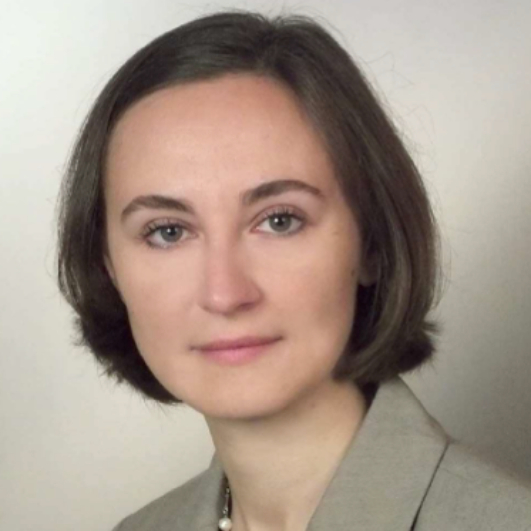
Dr. Maria Martisikova
Dr. Maria Martisikova is a Group Leader at the German Cancer Research Center (DKFZ) in Heidelberg, Germany. She studied Physics in Bratislava, Slovakia, and earned her Ph.D. in Particle Physics from the University of Hamburg, Germany. Since 2006, her research has focused on medical physics, with an emphasis on advancing the safety, precision, and efficiency of ion beam radiotherapy. Her work has led to the development of several innovative imaging techniques, taking advantage of high-energy physics technologies for single-particle tracking in ion beam radiotherapy. Her current research centers on the application of pixelated semiconductor detectors for ion-based imaging and treatment verification.