
PROGRAM
Women in Engineering
Chaired by Cristina Plettner (ESA)
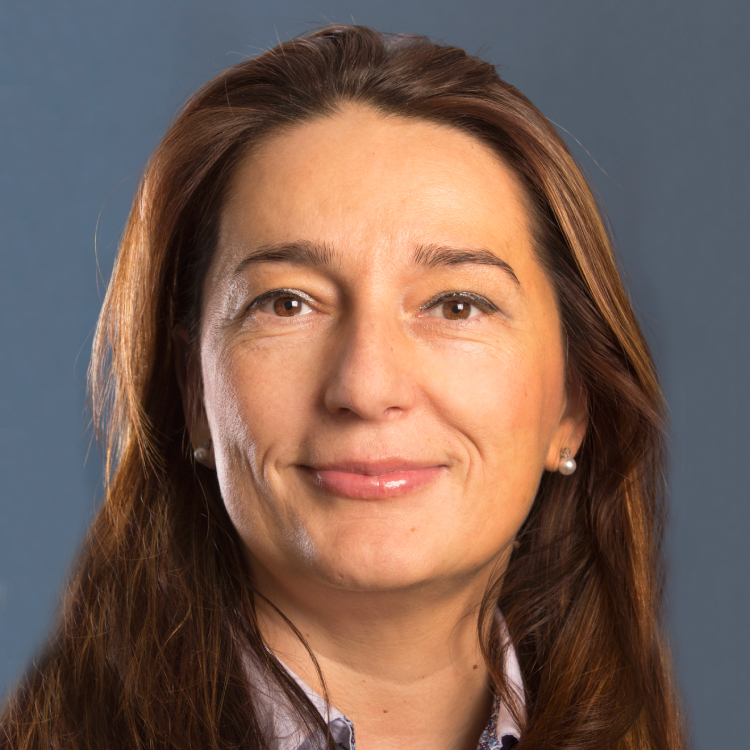
Cristina Plettner, Ph.D.
is a radiation hardness assurance engineer working in ESA on few science exploration, space weather and Earth Observation missions.
Her passion for space applications began more than a decade ago, when she joined Airbus Defense and Space as System Engineer Radiation, working on Artemis mission with ESA and NASA. She has authored and co-authored more than 100 technical research papers, in fundamental and applied nuclear physics and holds five patents. Dr. Plettner has served the space radiation effects community as reviewer for both NSREC and RADECS, as session Chair at RADECS, and as Short Course Instructor at NSREC.
Cristina was a panellist in RADECS WIE few times over the years, and she shares the passion for connecting, supporting, and inspiring females worldwide, and advocating for facilitating their recruitment and retention in STEM fields.
Welcome Reception
Monday, 28 September from 18:30

Pavla Hubálková, Ph.D.
Pavla Hubálková, Ph.D., is a Czech science communicator, journalist, and moderator dedicated to making scientific research accessible to wider audiences. She writes primarily for WIRED.CZ, co-hosts the science radio program Žárovky on Czech Radio Dvojka, and leads workshops on science communication for researchers.
Originally trained as a scientist, she earned degrees in Clinical Biochemistry and Chemistry Education and completed a Ph.D. in Neuroscience at Charles University. During a Fulbright research stay at Northwestern University in Chicago, she discovered her passion for science communication and transitioned from laboratory research to science journalism and public engagement.
Pavla Hubálková has contributed to numerous Czech media outlets and institutions, co-authored the first Czech-language book on science communication, and received the Czech Government’s 2024 Award for Science Communication.
In 2025, she published Neviditelné ženy ve vědě (“Invisible Women in Science”), a book featuring twelve interviews with outstanding women scientists from disciplines including sociology, physics, chemistry, medicine, law, and economics. Combining personal stories with data and insights on the role of women in research, the book highlights the diversity of scientific careers and aims to inspire future generations of scientists while increasing the visibility of women in science.
Women in Engineering Session
Wednesday 30 September 14:30-15:30
We will learn about the common passions that these distinguished panelists share for science and technology, about their backgrounds, the motivation to pursue technical careers and interesting stories along the way.
Panelists:
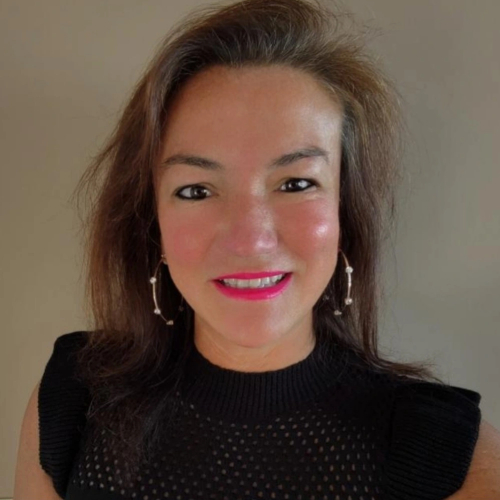
Prof. Fernanda Lima Kastenschmidt
Full Professor at the Federal University of Rio Grande do Sul (UFGRS), Brazil
Prof. Fernanda Lima Kastenschmidt leads international recognized research in dependable computing, semiconductor systems, and radiation tolerant architectures. Her research lies at the intersection of computer architectures, microelectronics, artificial intelligence and space systems, with a focus on designing reliable FPGA-based systems, RISC-V processors, and heterogenous System-on-Chip platforms. Her work advances methodologies for the qualification of digital systems under fault injection, heavy ion and laser testing.
Prof. Kastenschmidt has authored more than 300 scientific publications, co-authored several technical books and wrote the Springer “Fault Tolerance Techniques for SRAM-based FPGAs” book. She has played a leading role in the Brazilian space program, contributing to the development of scientific payloads for the NanoSatC-BR1 mission, launched in 2014, and the Nanosat-BR2 mission, launched in 2021.
Beyond her research, Prof. Kastensmidt has held several academic leadership positions at UFRGS.

Prof. Andrea Sagatova
Professor at the Slovak University of Technology in Bratislava, Slovakia
Prof. Andrea Sagatova is a professor at the Slovak University of Technology in Bratislava, where she lectures courses in the fields of nuclear physics and technology and on detection of ionizing radiation. She is the supervisor of two Master’s degree programs: the Nuclear and Physical Engineering and the Management in Nuclear, as well as the doctoral program in Physical Engineering.
She graduated from the same university, obtained her doctorate in the study program of Electrotechnology and Materials in 2005, and qualified as an associate professor in 2007.
Her scientific work focuses on the research and development of wide-bandgap semiconductor detectors of ionizing radiation for digital radiography. She is the principal investigator of national and international projects focused on semiconductor detectors, carried out in collaboration with institutions such as the SAS in Bratislava, CEA in Cadarache, and IEAP CTU in Prague.
In 2022, she was a finalist of the ESET Science Award in the category Outstanding Academic in Slovakia. She is the mother of two daughters, twins, high school students.
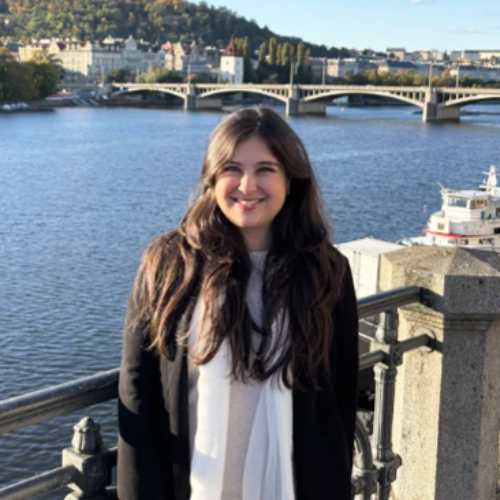
Catalina Lesmes
PhD student at the Czech Technical University in Prague
Catalina Lesmes Ramírez, a proudly Columbian, has graduated from high school with a strong passion for mathematics and numbers, later pursuing a degree in Mathematical Engineering at EAFIT University in Medellín.
During her undergraduate studies, she had the opportunity to complete a one-year internship in Prague, Czech Republic, at the Institute of Experimental and Applied Physics (IEAP). The internship inspired Catalina who fell in love with data science and graduated as a Mathematical Engineer in 2020.
In 2021, she began her professional career at NEU Energy (part of the ERCO Group) in Colombia. She worked there for three years as a Data Scientist and lead the Data Science team, where she gained valuable experience in both data science and leadership.
In 2022, Catalina joined an internal research project at EAFIT University, receiving a scholarship to pursue a master’s degree in applied mathematics, focusing on classification methods for Functional Data. She graduated with masters in 2024.
Around that time, Benedikt reached out with an offer to return to the institute and apply for a PhD. In 2024, she moved back to Prague to work as a researcher at IEAP, and in 2025, she began her PhD in Nuclear Engineering, focusing on dosimetry and the application of ionizing radiation, at the Faculty of Nuclear Sciences and Physical Engineering of CTU. Currently, Catalina’s research focuses on luminosity and radiation field measurements within the ATLAS experiment at CERN, specifically using the Timepix3 hybrid pixel detector from the Medipix Collaboration from CERN.